Visceral Fat Reduction: The Hidden Dangers of Belly Fat (And How to Get Rid of It)
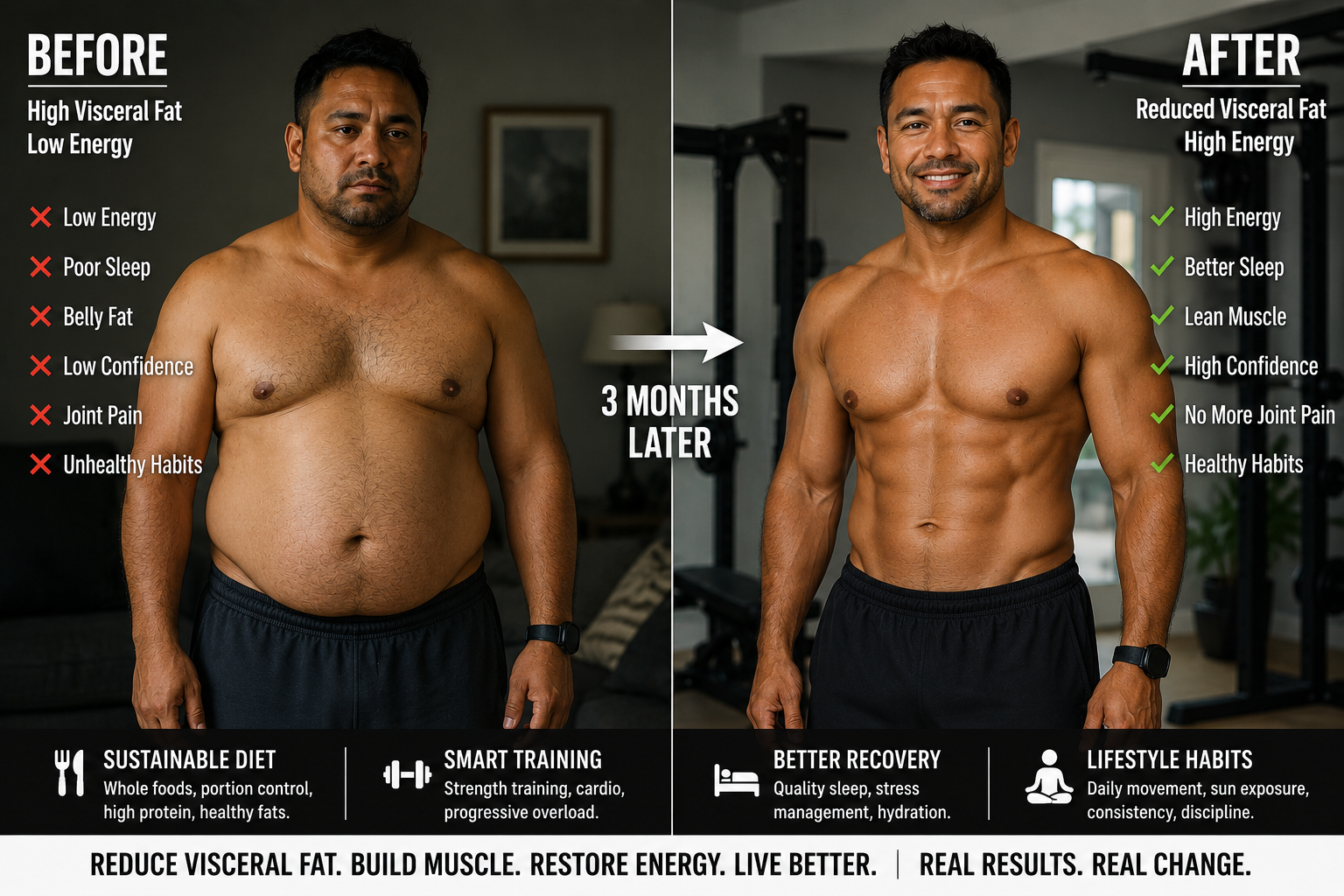
Most people think body fat is simply a cosmetic issue. They see a growing stomach, tighter-fitting shirts, or a few extra pounds on the scale and assume it's only affecting how they look.
The reality is that not all body fat is created equal.
Some fat sits just beneath the skin and is relatively harmless. Another type, known as visceral fat, accumulates deep inside the abdominal cavity and surrounds vital organs such as the liver, pancreas, and intestines. This hidden fat is far more dangerous than most people realize and is strongly linked to heart disease, Type 2 diabetes, high blood pressure, inflammation, and reduced longevity.
As an athletic trainer in St. George, Utah, I frequently work with men and women who want to improve their health, build muscle, and lose unwanted fat. One of the most important goals isn't simply losing weight—it's achieving meaningful visceral fat reduction.
Let's take a closer look at why visceral fat matters and, more importantly, how to get rid of it.
What Is Visceral Fat?
Visceral fat is the fat stored around your internal organs deep within your abdomen.
Unlike the soft fat you can pinch around your waist, visceral fat is hidden from view. You might not realize you have a dangerous amount of it until health markers begin moving in the wrong direction.
This type of fat is metabolically active, meaning it produces hormones and inflammatory substances that affect the entire body.
Over time, excess visceral fat can contribute to:
Insulin resistance
Type 2 diabetes
Elevated cholesterol
High blood pressure
Increased inflammation
Higher risk of heart disease
Reduced testosterone levels in men
The scary part is that someone can appear only moderately overweight while still carrying dangerous levels of visceral fat.
Why "Ditch the Dad Bod" Is More Than a Cosmetic Goal
Many men joke about having a "dad bod."
A little extra softness around the midsection often gets treated as a normal part of aging, fatherhood, or having a busy career.
However, the classic dad bod pattern—a growing waistline paired with shrinking muscle mass—is often a sign that visceral fat is increasing while lean tissue is decreasing.
This combination creates the perfect storm for declining health.
The Muscle Loss Problem
One overlooked consequence of carrying excess belly fat is that many men simultaneously lose muscle mass.
As activity levels decline and body fat increases, metabolism often slows. This creates a cycle where fat gain becomes easier while maintaining muscle becomes more difficult.
That's why the goal shouldn't simply be weight loss.
The goal should be building muscle while reducing visceral fat.
How to Lose Stomach Fat for Men: Focus on the Right Target
One of the biggest mistakes people make is trying to spot-reduce belly fat.
Unfortunately, endless crunches and ab workouts won't selectively burn fat from your stomach.
Visceral fat reduction happens through improving your overall energy balance, activity levels, nutrition, sleep, and recovery.
The encouraging news is that visceral fat tends to respond very well to healthy lifestyle changes.
In many cases, it decreases faster than other types of body fat.
Signs You May Be Carrying Excess Visceral Fat
You may want to pay closer attention if you notice:
Waist circumference increasing
Belt notches gradually moving outward
Energy levels declining
Blood pressure increasing
Difficulty losing weight
Reduced athletic performance
Low motivation and recovery
These signs don't automatically mean visceral fat is the cause, but they often appear together.
The Most Effective Strategies for Visceral Fat Reduction
Research consistently shows that combining proper nutrition with exercise is the most effective strategy for reducing harmful belly fat.
1. Prioritize Strength Training
If you want to ditch the dad bod, lifting weights should be a priority.
Strength training helps:
Preserve muscle mass
Increase calorie expenditure
Improve insulin sensitivity
Support healthy hormone levels
Improve body composition
Aim for 3–4 full-body strength-training sessions per week.
Focus on major movement patterns:
Squats
Deadlifts
Lunges
Push-ups
Rows
Pull-ups
Overhead presses
The goal isn't to train harder every day.
The goal is consistent progression over time.
2. Increase Daily Movement
Many people exercise for an hour and then sit for the other 15 hours they're awake.
Daily movement matters more than most people realize.
Simple strategies include:
Walking after meals
Taking stairs whenever possible
Parking farther away
Standing during phone calls
Aiming for 8,000–10,000 steps daily
These small habits can significantly contribute to long-term visceral fat reduction.
3. Improve Nutrition Quality
You don't need an extreme diet.
In fact, crash diets often backfire.
Instead, focus on:
Lean proteins
Fruits
Vegetables
Whole grains
Healthy fats
High-fiber foods
Protein deserves special attention because it helps preserve muscle while promoting fullness.
A simple starting point is consuming protein at every meal.
How to Keep Off Unwanted Fat With Ease
Losing fat is one challenge.
Keeping it off is where most people struggle.
The people who maintain healthy body composition for years don't rely on motivation alone.
They create systems.
Sustainable Habits That Work
The most successful clients I've worked with consistently follow these principles:
Strength train regularly.
Eat protein at every meal.
Walk daily.
Prioritize sleep.
Track progress monthly.
Focus on consistency instead of perfection.
Notice that none of these require extreme restriction.
They simply require repetition.
The Often Overlooked Role of Sleep
Sleep is one of the most powerful tools for managing body composition.
Poor sleep affects:
Hunger hormones
Recovery
Stress levels
Training performance
Fat storage
People who consistently sleep less than 6–7 hours often find it much harder to lose abdominal fat.
If improving your sleep isn't currently part of your fat-loss plan, it should be.
Quick Sleep Improvement Tips
Keep a consistent bedtime.
Limit screen exposure before bed.
Keep your room cool and dark.
Avoid excessive caffeine late in the day.
Small improvements in sleep can produce surprisingly large improvements in body composition.
Why Fast Fat Loss Usually Fails
One reason so many people struggle with belly fat is that they attempt overly aggressive approaches.
They slash calories, perform excessive cardio, and try to lose weight as quickly as possible.
While this may produce short-term scale changes, it often comes at the expense of muscle mass.
When muscle decreases, long-term fat maintenance becomes harder.
A slower, sustainable approach almost always wins.
Aim for approximately 0.5–1% of body weight lost per week while preserving strength and muscle mass.
A Practical Action Step You Can Use Today
If you want one habit that can immediately improve your chances of losing visceral fat, start taking a 10-minute walk after each meal.
This simple strategy can:
Increase daily calorie expenditure
Improve blood sugar control
Support digestion
Improve recovery
Help establish a more active lifestyle
It's simple, effective, and requires no special equipment.
The Bottom Line
Visceral fat is far more than a cosmetic concern. It is one of the most important indicators of long-term health, performance, and quality of life.
The good news is that your body responds remarkably well to consistent exercise, strength training, improved nutrition, better sleep, and daily movement.
If your goal is to ditch the dad bod, improve your health, and keep unwanted fat off for good, focus on building habits you can sustain for years—not weeks.
Tired of watching your stomach grow and your arms shrink? Stop putting it off and get started today. Whether you're training in my private home gym in St. George or working with me online, we'll build a plan that helps you lose fat, build muscle, and create results that last.
Learn more here: https://www.habitfitnesscoach.com/