Visceral Fat, Men Age 35-45: The Hidden Fat That Predicts Mortality
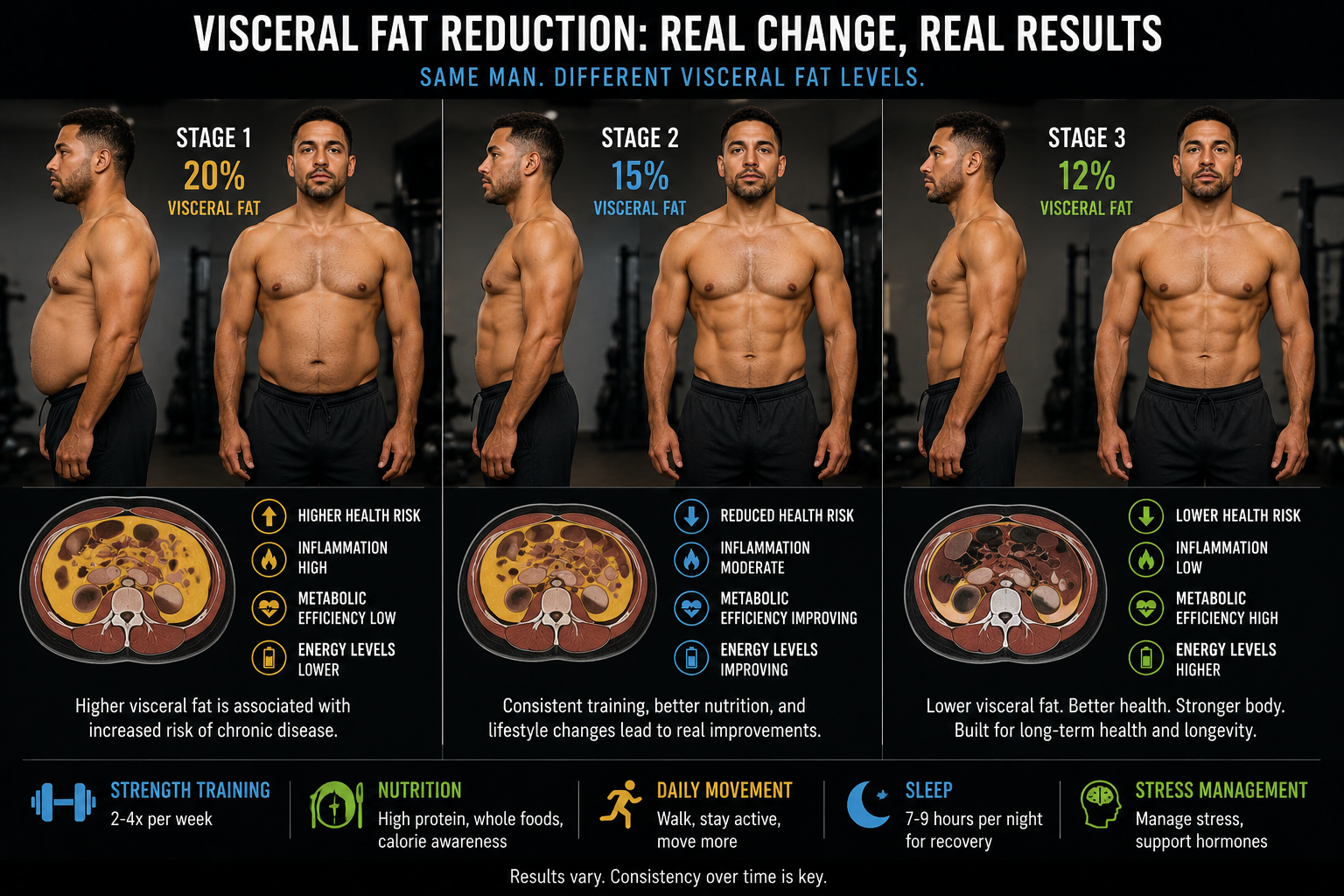
Most men worry about the fat they can see.
The belly hanging over the waistband. The extra softness around the midsection. The stubborn pounds that seem harder to lose every year.
But the most dangerous fat in your body isn't necessarily the fat you see in the mirror.
It's the fat you can't see.
As an athletic trainer in St. George, Utah, I often work with men who look relatively healthy on the surface but are carrying excess visceral fat—a type of body fat strongly associated with chronic disease, reduced healthspan, and increased mortality risk.
If you're a man between 35 and 45 years old, understanding visceral fat may be one of the most important things you can do for your long-term health.
What Is Visceral Fat?
Visceral fat is fat stored deep inside the abdominal cavity around your internal organs.
Unlike subcutaneous fat—the fat located just beneath the skin—visceral fat surrounds organs such as the liver, pancreas, and intestines.
This distinction matters because visceral fat is metabolically active. In simple terms, it influences hormone production, inflammation levels, blood sugar regulation, and cardiovascular health.
A person can have a relatively normal body weight and still carry dangerous amounts of visceral fat.
This is one reason why appearance alone doesn't always tell the full story.
Why Visceral Fat Predicts Mortality
Research consistently shows that higher levels of visceral fat are associated with increased risks of:
Heart disease
Type 2 diabetes
High blood pressure
Stroke
Metabolic syndrome
Certain cancers
Premature death
Scientists believe much of this relationship comes from the inflammatory chemicals produced by visceral fat tissue.
Unlike fat stored elsewhere in the body, visceral fat can contribute to chronic low-grade inflammation that places stress on multiple body systems over time.
This is why many health experts view excess abdominal fat as more than a cosmetic issue.
It's a health issue.
Why Men Age 35–45 Are Especially Vulnerable
Many men notice a shift in body composition during their mid-30s and early 40s.
Work responsibilities increase.
Stress rises.
Sleep often declines.
Physical activity tends to decrease while caloric intake remains the same—or even increases.
Meanwhile, muscle mass naturally becomes more difficult to maintain without intentional resistance training.
The Perfect Storm
Several factors commonly contribute to visceral fat accumulation:
Chronic stress
Poor sleep habits
Excess calorie intake
Low protein consumption
Reduced physical activity
Loss of muscle mass
Increased alcohol consumption
Many men don't recognize the changes because weight gain often occurs gradually over several years.
Five pounds becomes ten. Ten becomes twenty.
Before long, visceral fat levels may be significantly higher than they were a decade earlier.
Longevity and Disease Prevention Start in the Midsection
One of the most important concepts in longevity and disease prevention is understanding that health isn't just about lifespan.
It's about healthspan.
Healthspan refers to the number of years you remain active, independent, energetic, and capable.
Reducing visceral fat is one of the most effective ways to improve healthspan because it positively impacts multiple risk factors simultaneously.
When visceral fat decreases, people often see improvements in:
Blood sugar control
Blood pressure
Cholesterol levels
Energy levels
Exercise performance
Recovery capacity
Small improvements in body composition can create significant long-term benefits.
How Do You Know If You Have Excess Visceral Fat?
Most people don't have access to advanced medical imaging.
Fortunately, there are simpler indicators.
Waist Circumference Matters
For men, a waist circumference above 40 inches is generally associated with elevated health risk.
Even before reaching that threshold, increasing waist measurements often indicate growing visceral fat levels.
Another simple question:
Has your waist size increased over the last five years despite no major changes in height or activity?
If so, it may be worth paying closer attention to body composition and lifestyle habits.
Coaching on Visceral Fat Loss: What Actually Works?
The good news is that visceral fat tends to respond well to lifestyle changes.
Unlike some stubborn subcutaneous fat deposits, visceral fat often decreases relatively quickly when healthy habits are implemented consistently.
Focus on These Priorities
Strength train 2–4 times per week.
Walk daily and increase overall movement.
Prioritize protein intake.
Improve sleep quality.
Manage chronic stress.
Reduce excess alcohol consumption.
Maintain a sustainable calorie deficit if fat loss is needed.
Notice what's missing?
Extreme diets.
Detoxes.
Fat-burning supplements.
The most effective approach is often the least exciting: consistency.
The Best Exercise Strategy for St. George Fat Loss
Many people believe they need endless cardio to lose abdominal fat.
In reality, the combination of strength training, daily activity, and proper nutrition tends to produce the best outcomes.
As a coach working with men throughout Southern Utah, I've found that preserving muscle while reducing body fat is one of the most effective strategies for improving both appearance and long-term health.
The goal isn't simply to weigh less.
The goal is to carry less visceral fat while maintaining strength, energy, and function.
The Bottom Line
For men age 35–45, visceral fat may be one of the strongest predictors of future health outcomes.
While it often accumulates quietly, its effects can influence everything from heart health to metabolic function and overall longevity.
The encouraging news is that visceral fat is highly responsive to healthy lifestyle changes.
Strength training, improved nutrition, better sleep, and consistent activity can dramatically reduce disease risk while improving how you look, feel, and perform.
Trying to reduce disease risk and improve your long-term health? Learn more about personalized coaching, fat loss strategies, and sustainable fitness habits at https://www.habitfitnesscoach.com/