The 5 Mobility Mistakes Keeping Men Stiff and Injured: A Guide to Better Joint Health
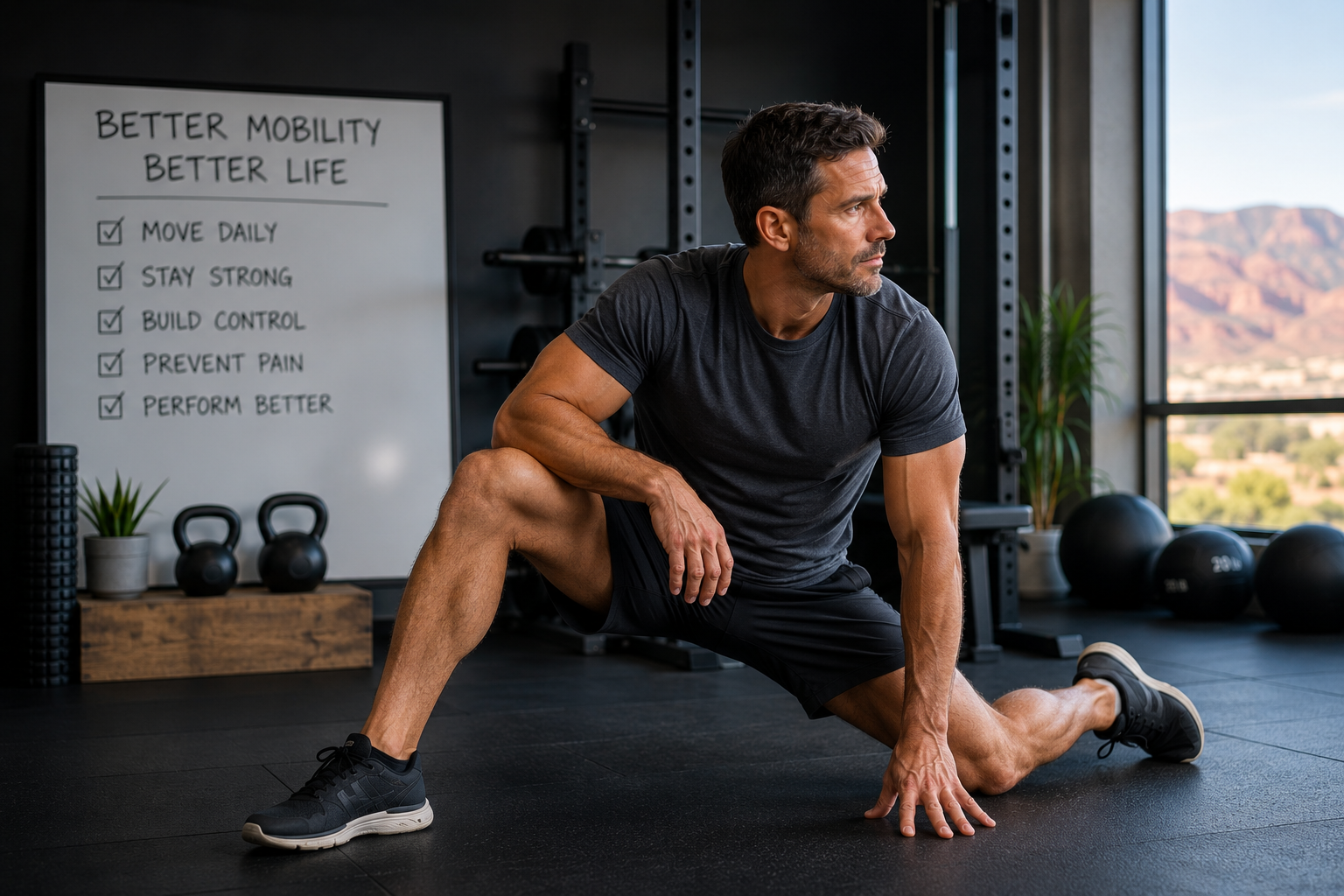
If you've ever stood up from a chair and felt your hips tighten, your knees ache after a workout, or your lower back complain after a long day, you're not alone.
Many men assume stiffness is simply part of getting older. In reality, most mobility issues are the result of movement habits, training mistakes, and neglected joint health rather than age itself.
As an athletic trainer in St. George, Utah, I work with clients every week who are frustrated by nagging aches, reduced flexibility, and recurring injuries. The good news is that many of these problems can be improved with a few strategic changes.
Here are the five biggest mobility mistakes that may be keeping you stiff, limiting your performance, and increasing your risk of injury.
Mistake #1: Ignoring Hip Mobility Until Something Hurts
The hips are one of the most important joints in the body. They influence how you squat, run, jump, lift, and even walk.
Unfortunately, many men spend hours sitting at desks, in vehicles, or on the couch. Over time, this can contribute to reduced hip mobility and poor movement patterns.
When the hips stop moving efficiently, the body often compensates elsewhere. The lower back, knees, and even ankles may be forced to absorb stress they weren't designed to handle.
What To Do Instead
Spend five minutes daily working on:
Hip flexor stretches
Deep squat holds
90/90 hip rotations
Walking lunges
Consistency matters more than intensity. A few minutes every day often produces better results than a single long mobility session once per week.
Mistake #2: Treating Low Back Pain as a Stretching Problem
One of the most common misconceptions I hear is, "My back feels tight, so I need to stretch it."
While stretching can help temporarily, low back pain is often influenced by factors beyond muscle tightness.
Weak core muscles, poor hip mobility, limited ankle mobility, and movement compensations can all contribute to excessive stress on the lumbar spine.
Research consistently shows that improving movement quality and core stability can help reduce recurring back discomfort while improving overall function.
What To Do Instead
Focus on:
Core stability exercises
Glute strengthening
Hip mobility work
Proper lifting mechanics
Rather than constantly stretching your lower back, address the underlying reasons it may be working overtime.
Mistake #3: Waiting for Knee Pain Before Addressing Movement Quality
Many people think knee pain originates exclusively in the knee.
In reality, the knee often becomes the victim of problems occurring above or below it.
Poor hip mobility, weak glutes, limited ankle mobility, and faulty movement patterns can all increase stress on the knee joint during daily activities and exercise.
This is especially common during squats, lunges, stair climbing, and recreational sports.
The Mobility Chain Matters
Think of your body as a chain.
If one link becomes restricted, the neighboring links often absorb extra stress.
For healthy knees, focus on:
Improving ankle mobility
Strengthening the glutes
Enhancing hip mobility
Practicing proper squat mechanics
Maintaining healthy body composition
Addressing these areas often helps reduce unnecessary strain on the knees while improving overall athletic performance.
Mistake #4: Skipping Corrective Exercise Because It Feels "Too Easy"
Many fitness enthusiasts enjoy intense workouts. Heavy lifting, hard conditioning sessions, and challenging training programs can be incredibly rewarding.
The problem is that many people treat corrective exercise as optional.
Corrective exercises are designed to improve movement quality, joint alignment, stability, and muscular balance. While they may not leave you exhausted, they often address the root causes of recurring pain and dysfunction.
As an athletic trainer, I've seen countless clients break through plateaus after dedicating just a few minutes per workout to targeted corrective exercises.
Simple Corrective Exercise Examples
Some of my favorites include:
Glute bridges
Bird dogs
Dead bugs
Wall slides
Split squat holds
Band-resisted lateral walks
These movements help reinforce efficient movement patterns that carry over into heavier training.
Mistake #5: Thinking Mobility Means Stretching
This may be the biggest misconception of all.
Mobility and flexibility are not the same thing.
Flexibility refers to the ability of a muscle to lengthen. Mobility refers to your ability to actively control movement through a range of motion.
You can be flexible and still have poor mobility.
For example, someone may be able to touch their toes yet struggle to perform a deep squat with good control.
Mobility Requires Strength
True mobility combines:
Flexibility
Strength
Stability
Motor control
This is why mobility training should include active movements rather than relying entirely on passive stretching.
Exercises such as controlled articular rotations (CARs), bodyweight squats, lunges, and loaded carries can help develop usable mobility that transfers to real-life activities and sports.
A Simple Daily Joint Health Routine
If you're looking for a practical starting point, try this 10-minute routine:
1 minute deep squat hold
10 walking lunges per side
10 glute bridges
10 bird dogs per side
1 minute hip flexor stretch per side
10 bodyweight squats
Performing this routine consistently can improve movement quality, reduce stiffness, and support long-term joint health.
The best mobility program isn't the most advanced one. It's the one you'll actually perform regularly.
Better Movement Leads to Better Performance
Whether your goal is building muscle, running faster, reducing pain, or simply staying active with your family, movement quality matters.
Improving hip mobility, addressing low back pain proactively, reducing knee pain through smarter movement, and incorporating corrective exercise can dramatically improve both performance and longevity.
Your body is designed to move. The more efficiently it moves, the better you'll feel both inside and outside the gym.
Want personalized guidance to improve mobility, reduce pain, and optimize your joint health? Learn more about Habit Fitness Coach and discover how individualized coaching can help you move, feel, and perform at your best: https://www.habitfitnesscoach.com/